Day in the life: Creativity inside VAPA classrooms


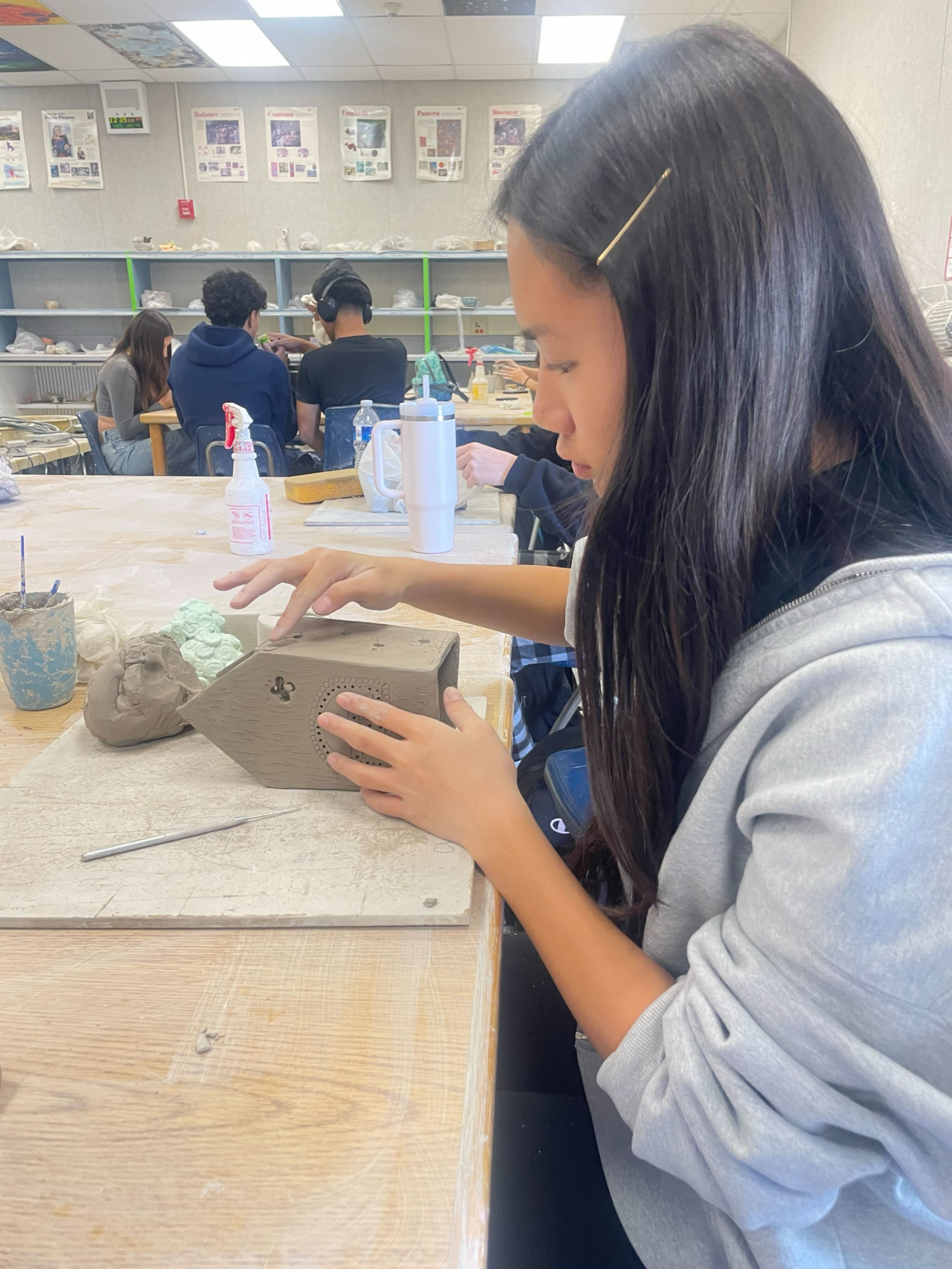
A simple block of taupe colored clay is transformed through the intricate pottery skills of ceramics students. With each project created in the class, students not only improve at pottery making, but also learn lessons like perseverance and determination that can be used outside of the classroom.
The ceramics classes offered at Walnut, Intro to Ceramics and Advanced Ceramics, focus on developing the pottery skills of its students through projects like making plates and basic figurines. While Advanced Ceramics students take on more complex projects, Intro to Ceramics students focus on basic concepts, like shaping and working with clay, that are fundamental to ceramics. This basis to the art prepares beginner students to take on harder projects and progress throughout their time in the class.
“At first I didn’t know certain [techniques] but after a while [they] got easier because I had done it before,” Intro to Ceramics student freshman Chloe Yick said.
After learning the basics of ceramics, Advanced Ceramics students are given the opportunity to express their creativity through their projects by experimenting with factors like color and shape. This aspect of the class emphasizes the imaginative part of ceramics.
“What’s so good about ceramics is that you can think of [an idea] and make it into something [physical],” Advanced Ceramics student senior Jeremiah Neria said.
Even for Advanced Ceramics students, being in the class comes with receiving important advice and critiques from ceramics teacher, Michael O’Shields. His feedback is given throughout the class and is helpful for students in finding the balance between technique and artistry in their work.
“In Ceramics, every project isn’t going to go [well] at first, so it is always a lot of trial and error,” Advanced Ceramics student senior Sienna Arroyo said. “It shows how I need to take time on things because the perfect outcome won’t always come on the first try.” Ω
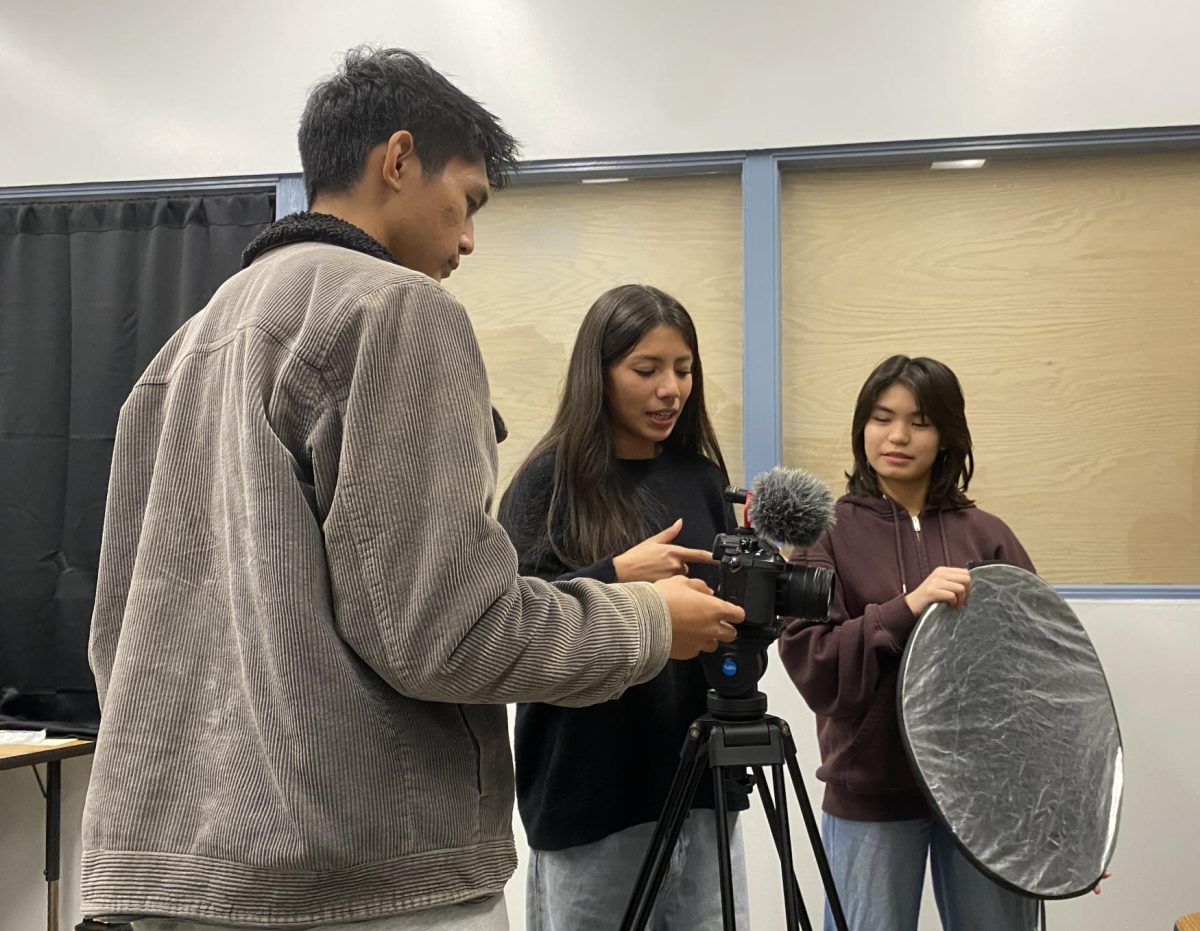
Advanced and Digital Video Production utilizes independent class time to work on projects that challenge their communication and responsibility.
Time in the classroom revolves around group projects that test students’ editing, filming and sequencing capabilities. However, Advanced Digital Video Production focuses on real life applications, while the regular class centers around developing foundational production techniques.
Currently, Advanced Digital Video Production has started a project involving product commercials, with the regular class in preparation for their next project, which is documentary-making.
“It’s difficult to have classroom routines in a work setting. I focus on preparing them for the real workforce and being resilient in challenging situations,” Career Technical Education (CTE) and English teacher Karen Alorro said.
Students in Advanced Digital Video Production typically have professional production jobs for school events or external businesses, such as live shoots for school rallies and commercials.
“We’re more inclined to [make] more creative films. [It’s] a great way to express how people feel,” Advanced Digital Video Production student junior Jennah Faridi said. “It teaches you a lot of good skills, like communication or resourcefulness.”
For both classes, students’ daily routines revolve around their stage in the production process. Before starting projects, students usually work on their storyboard, taking test shots on campus, finding filming locations and choosing actors for their videos. During production, students work with their teams and go around campus to film. After finishing the video, students upload their footage and start the sequencing process, where the producer and director review the components of the video. Students then refine and improve certain parts of the video to produce their final product during class.
“When I work with my [group], I see different people with different mindsets who encourage me to do better,” Digital Video Production student freshman Prabhpreet Kaur said. Ω
![Painting with love | Advanced Art student junior Molly Chung draws in her notebook for class while expressing her creativity. “Friday is [usually] critique and Monday is figure drawing. It’s fun. When I get home, I set aside time specifically to draw,” Chung said.](https://whshoofprint.com/wp-content/uploads/2026/01/IMG_9763-1-e1769816856126.jpeg)
United by their love of art, students explore topics such as anatomy, fundamentals of professional art and various color mediums. They have not only built on their knowledge and skills from previous courses, but are also building their passion as a whole.
The art pathway on campus consists of three different courses: Fundamentals of Art, Advanced Art and Advanced Placement (AP) Studio Art. Senior Anhad Singh in AP Studio Art mentions how his passion has not only been built by art classes, but also sustained through daily routines such as drawing exercises. He believes that he has developed and built his drawing skills through drawing anatomy postures within different time frames, which challenge him to improve.
“With art, it’s sometimes hard to maintain passion, especially when you’re not able to draw stuff you imagine in your mind. But with these classes, it helps you gain that knowledge and gain that skill and keep yourself motivated,” Singh said.
Despite the art classes being tailored for talented students to dedicate years of high school to taking these classes, art teacher Michelle O’Shields believes the opposite. She believes that every level of the art classes can develop essential creativity and art skills.
“Every Monday, they do figure drawing [in class]. The rest of the days during the week, they have daily figure drawing that they have to do at some point during the day or at home, so that they continue to work on all their figure drawing skills. These practices are really about creativity, which is very foundational, and very important for them to learn. They don’t have to worry about reference or how realistic it looks, they just have to make sure that there’s creativity [in what they create],” O’Shields said.
Along with this, some art students believe that they have reinforced their prior passion about art through their art classes. Junior Molly Chung in Fundamentals of Art strongly believes that her prior experience in art played a key role in building her passion.
“I never really took art class except for eighth grade in middle school. This is my first year here taking art so I feel like a lot has changed, but I’m used to doing my own thing with art. It’s different because it makes me do what I want to do with my art,” Chung said.
At the end of the day, these art classes are both similar in what they build and different in what they teach. While Advanced Art may teach advanced concepts, it still teaches and builds the same creative thinking and application skills unique to art.
“The biggest overarching thing that I really want to push and hone is their creativity. That is paramount to everything that they’re learning. Creativity does not mean just art and applied arts, it’s everything,” O’Shields said. Ω
Your donation will support the student journalists of Walnut High School. Your contribution will allow us to purchase equipment and cover our annual website hosting costs.