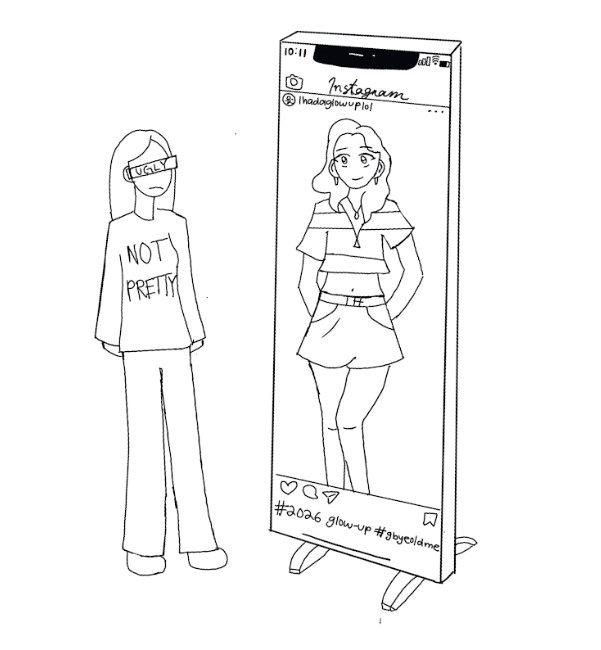
Whether I am scrolling on TikTok or Instagram, it feels almost impossible to avoid videos such as “Top 10 Ways You Can Glow-Up for 2026”. These videos commonly focus on ways to max out your attractive potential, such as working out every single day or drastically changing your skincare routine. The idea of glow-ups revolve around physical transformation while they should center around self-improvement and lasting change.
“Glow up” — a synonym created by the internet and social media for self-improvement can be achieved through undergoing major wardrobe changes such as buying the newest Alo workout set or spending a large amount of money to buy a Dyson Airwrap hair tool. After seeing a video promoting an oil-cleanser that preached clear skin in just 10 days, I was captivated and bought the cleanser. However, after the awaited 10 days, barely any change had been made to my skin. Because of social media, the idea of glowing up has been tied with consumerism and the need for specific materialistic things.
According to the National Institute of Health, constant social media exposure, “[Social media platforms primarily] focus on appearance, often promote idealized body standards, leading young users to internalize unrealistic beauty ideals. This has resulted in increasing body dissatisfaction and negative mental health outcomes, as adolescents seek validation through likes and comments.” On the surface, “glow-up” culture may seem like a harmless way for someone to improve themselves, but it can cause deeper problems, such as low self-esteem and unrealistic expectations.
Glow-up culture promotes and prompts comparison between people and can lead to low self-confidence and carrying a pessimistic mindset. It reflects the toxicity of an unattainable appearance. It creates an idea of how someone’s version of themselves is not enough, and that they must change themselves so that they can fit in with society’s standards. Adhering to these expectations and making yourself look physically better does not result in self-fulfillment and can result in psychological effects.
Changing things on the outside does not create any permanent or lasting change. It can lead to unhealthy obsessions with one’s appearance and severely destroy someone’s self-image. However, glow-ups also have a positive side to it in how it can boost a person’s confidence and empower them.
The term is also harmful to teenagers and young adolescents when they hear things such as “you had a glow up” or “you look different”. These comments can drive people to doubt or downplay their past selves.
In many examples from the entertainment field, in“Princess Diaries” (2001), Amelia Thermopalis’s glow up consists of replacing her glasses with contacts, straightening her curly hair, a whole new wardrobe and makeup while in the TV series, “The Summer I Turned Pretty” (2022), Belly Colkin’s glow up includes her having her braces removed, new hairstyle and similar to Amelia, a whole new wardrobe. When a character is described as having a “glow up”, their personality and characterization remains the same with only their outside appearance being changed. Entertainment and social media has reduced glow up culture to only drastically alter someone’s physical appearance rather than improving internal things such as a more positive mindset.
The idea that glow-ups are limited to changing how someone looks sends a toxic message of how in order to glow up, one must change a certain characteristic such as their hair, makeup or about themselves. Glow-up culture should instead focus on the aspect of self-improvement and mental health rather than someone’s physical appearance.