After a long day of school and dance practice, I come home with heavy eyelids and drained of motivation. As I head to the couch for a nap, my mom sees me and rolls her eyes. “I told you last night to go to bed earlier,” she says. Of course, my late bed time of 12 a.m. is the reason for my exhaustion. After all, how exhausting can being a student be?
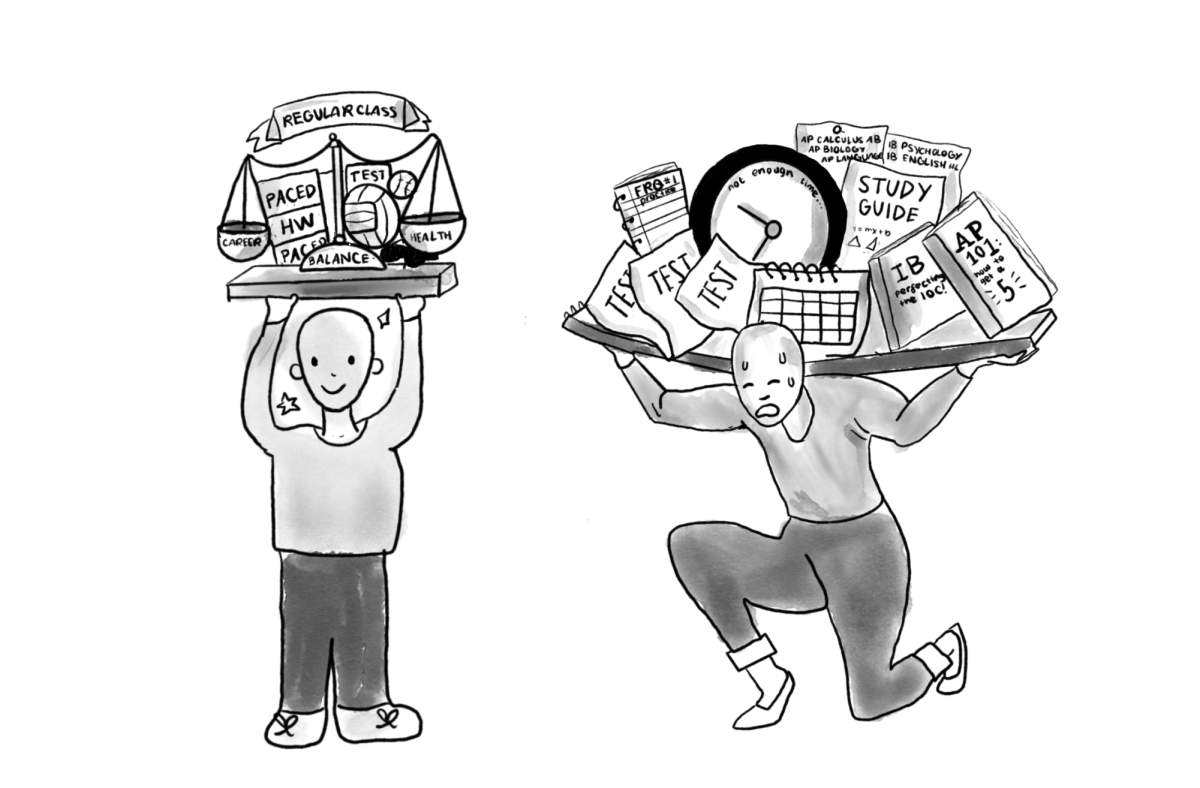
Let’s walk through the average student schedule. The day begins bright and early at 7 a.m. (or earlier) while your brain is still asleep. Then comes school: a total of six classes, each loaded with homework and quizzes that will make or break your GPA. This, however, is just the beginning. After the bell rings, students head off to sports, clubs, part-time jobs or for overachievers, all of the above. All these extracurriculars don’t feel “extra” anymore because for colleges, well-rounded students are now the expected bare minimum.
Our exhaustion is something you can’t fix with sleep. Students today are balancing expectations, social pressures and constant competition with our peers. We’re told to “enjoy our youth” while also being reminded that every grade, activity and decision matters for our future.
Don’t worry though, our parents have solutions for us! “Manage your time better.” “Go to bed earlier.” To adults, student exhaustion doesn’t really count since we’re not working full-time jobs or paying bills. What’s worse is that when students actually show signs of burnout like losing motivation, struggling to focus or taking a break, it’s labeled as laziness because to adults, the problem isn’t the system, it’s a personal failure.
Parents fail to understand that exhaustion isn’t something you unlock only in adulthood. Students are tired but not because we’re lazy or unmotivated or because we stay up too late. We’re tired because we’re doing everything with no time for rest.
But it’s fine. We’ll just “get to bed earlier.”