When someone asks you, “Hey, what English class are you in?” it shouldn’t feel like an insult. It’s just that Advanced Placement (AP) and honors classes feel so much more common than regular classes. Looking at the stats, the number of honors classes across different subjects aren’t more than regular classes. So why does it feel like they are?
One explanation is that students who are taking an honors class are more often comfortable talking about it. For many of these students, it could be a fact of pride, something they worked hard for or just an expectation. AP classes are already so common that they can just be the natural choice.
Even for subjects that give students a choice between AP, International Baccalaureate (IB), honors or regular, classes are at least 50% regular. Many higher-level classes are AP only, however, which can make it seem like there are far more students in AP classes than in regular classes.
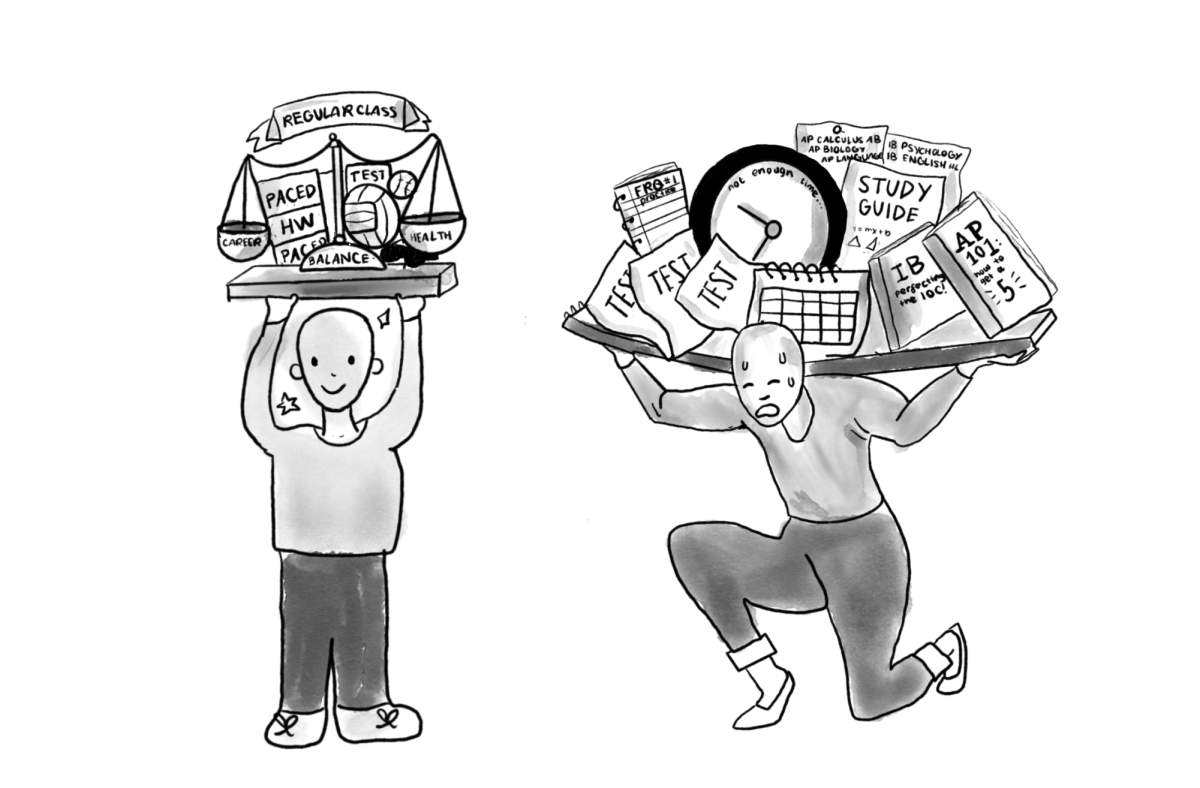
When selecting classes, many of us often feel pressured to “just take honors instead,” and are pushed by friends and parents to choose a more advanced level of learning. An increase in workload isn’t for everyone, and students should consider what option is actually best for their own skills and learning pace. The fact remains: all students are pressured to take higher-level classes that they might not be able to keep up with.
If students are just choosing classes based on their own goals, why do regular classes still feel “less than” honors, AP or IB? The answer is us, the students. Many of us see regular courses as a step below, so it’s treated as such. It’s true that advanced classes are ahead, can have faster learning paces and an increase in work, but does that mean our friends in regular classes should be treated differently? Most of the time it just doesn’t actually matter. They are simply taking the classes they need.
While an AP class might look more impressive, we still need to focus on learning. Don’t choose a class you’re not sure you can handle just because you want to be in a class with friends or because you’re expected to. Many of us already get too little sleep and have too much stress over homework. Only if you’re sure that you can manage the workload, enjoy the subject or value the college credits enough can higher-level classes fit your schedule and career plans well.
Find out which classes fit your goals the best. Talk with your Grade Level Coordinator, parents and friends— or even visit the College and Career Center for advice. Account for the relevant risks and find your own personal balance.
Instead of letting the conversation drop after they respond, “No, not honors,” ask how the class is going. Remember to not focus on fitting standards that aren’t ideal for their learning.