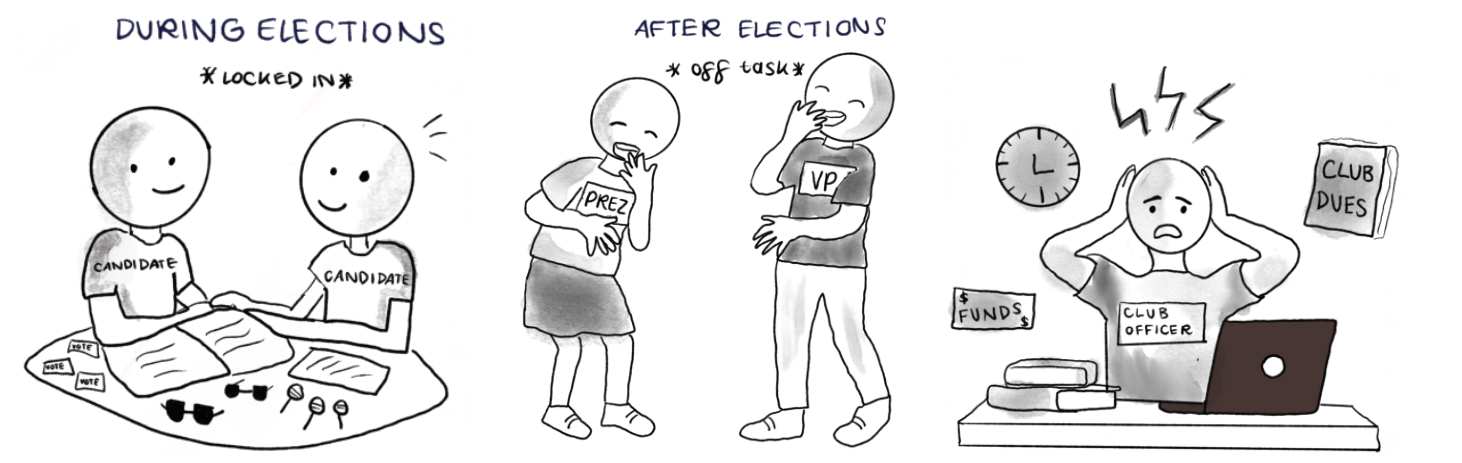

Every year during officer applications and interviews, new applicants come in with ideas, initiatives to implement to “better” the club and organization, changes they hope to make in the coming year and other impacts that will change the club — only if they are given the position. They are motivated and determined, but once they’re on the team, that energy disappears. Instead of bringing those ideas back on the table, a lot of officers default to just waiting for tasks and not meeting their statements and determinations.
At the beginning of the year, most clubs reinforce its rules and expectations of the officer team clearly. But as the school year moves on, that consistency seems to dwindle, especially in positions with co-officers, who start assuming the other is handling their responsibilities and fail to communicate properly with each other. Eventually, senior officers step in to compensate. It’s disappointing to see how high schoolers are unable to do the bare minimum for what they signed up for, and while clubs are a ploy to help garner leadership, teamwork and collaboration, it’s slowly losing its purpose.
From a member’s perspective, this can also look like inactivity, and as they start losing the motivation to participate and commit to club activities, the club starts to have less meetings and motivation to continue. Plans that were made in the beginning of the year are never carried out and long term goals or traditions fade. This calls for more transparency within the club. While officer meetings and executive decisions should be made and kept within the officer team, long term objectives and progress updates for the future of the club should be shared with the general members so they are not only looking forward to a future with the club but also holding the team accountable to meet such expectations.
There are many factors as to why this happens. As the school year progresses, many students also begin to balance heavier workload and extracurriculars, so their officer responsibilities might get overshadowed, making it hard to consistently follow through on every idea. One way clubs can address this is by revisiting the ideas officers shared during the application process. Creating these mid-year reviews to reflect on these original ideas could help the team reconnect with the motivations that led them to pursue leadership roles in the first place.
It’s also important to recognize that many students step into officer roles for the first time without guidance on how to manage their position or coordinate on the team. That’s why it’s important for senior officers to pass down their knowledge rather than leaving the club to new officers altogether. Some clubs can release officer applications sooner rather than later in the school year, in March or April. That way, new officers are able to learn their role while still receiving guidance from their predecessors. Ω