Opening up his computer, he opens up “Osu”. Clicking away while the music plays, each beat clicked brings him one step closer to mastering the song and honing his skill. To sophomore Kelvin Chiu, “Osu” isn’t just a game; it’s a lifestyle.
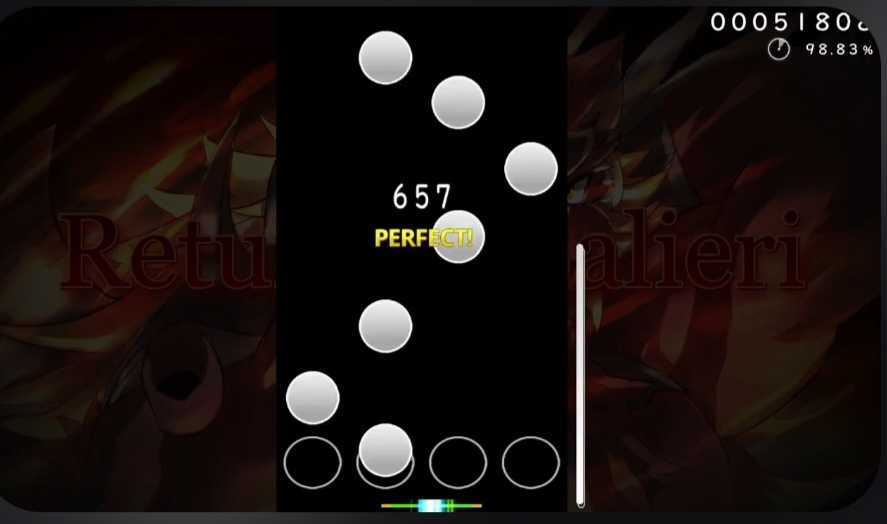
“Osu” is an online game in which players click many dots in a sequence that represent beats of songs. Chiu takes his passion a step further and teaches people how to play and get better at the game. Ever since he started experiencing skill walls—times when his ability could not progress—he resorted to focus on helping others become more skilled at the game.
Chiu considers himself a pro who likes to play mainly casually and not for any rankings. He has been playing “Osu” since July 2022. He’s loved the game ever since because of his love for rhythm games. In the past, he started out with the Roblox game, “Robeats,” which involves clicking and holding moving lines and rays of dots that represent beats in a song.
When Chiu coaches people, he first starts off by evaluating them. He has his clients first send clips of them playing Osu. Using this, he determines if he is able to use his knowledge to improve them, but sometimes, he can face challenges that block his and his client’s goals.
“People request me to coach them for a certain amount of money, [$25 per hour], and I review the clips as a request. After, I let them know if they’re eligible for me to coach them. If they’re skilled enough, I coach them,” Chiu said.
One of the many challenges Chiu faces is when he hits skill walls. He is relatively “pro” at the game, however, when he encounters situations where he or his online Zoom clients can’t advance to the next level, things get more complicated.
“It’s stressful when you get to a point where you can’t really improve yourself. You want to play harder sounds and beat maps or have better accuracy, but as much as you practice or try your best to learn how to get better, you eventually stop getting better,” Chiu said.
When skill walls happen, Chiu has to stop teaching his client due to him not being able to help improve their skills. While he keeps his coaching private, those who know of his hobby consider it to be quite interesting and adds a unique view on his personality. Sophomore Celyn Fuente has known him for years and notes how his coaching reflects his personality.
“I think taking your time to teach other people is a big thing, and it’s pretty selfless because you’re sacrificing your own time to someone to help better them, instead of using that time to better yourself,” Fuente said. “I would say simultaneously, you improve yourself and the person because you’re uplifting others.”
Despite not knowing much about Chiu’s teaching of “Osu,” sophomore Juno Huang is also quite observant of how “Osu” has affected Chiu.
“He wants to give others an opportunity to learn how to play the game just like he does because he cares for other people, whether or not he’s friends with them,” Huang said.
At the end of the day, Kelvin faces all the challenges with an open mind and perseverance. No matter how hard he tries, even he can’t hide his hard work.
“Teaching people really develops responsibility for me. I learned how to manage my time, get better as a person, and [overcome] some difficulties,” Chiu said.