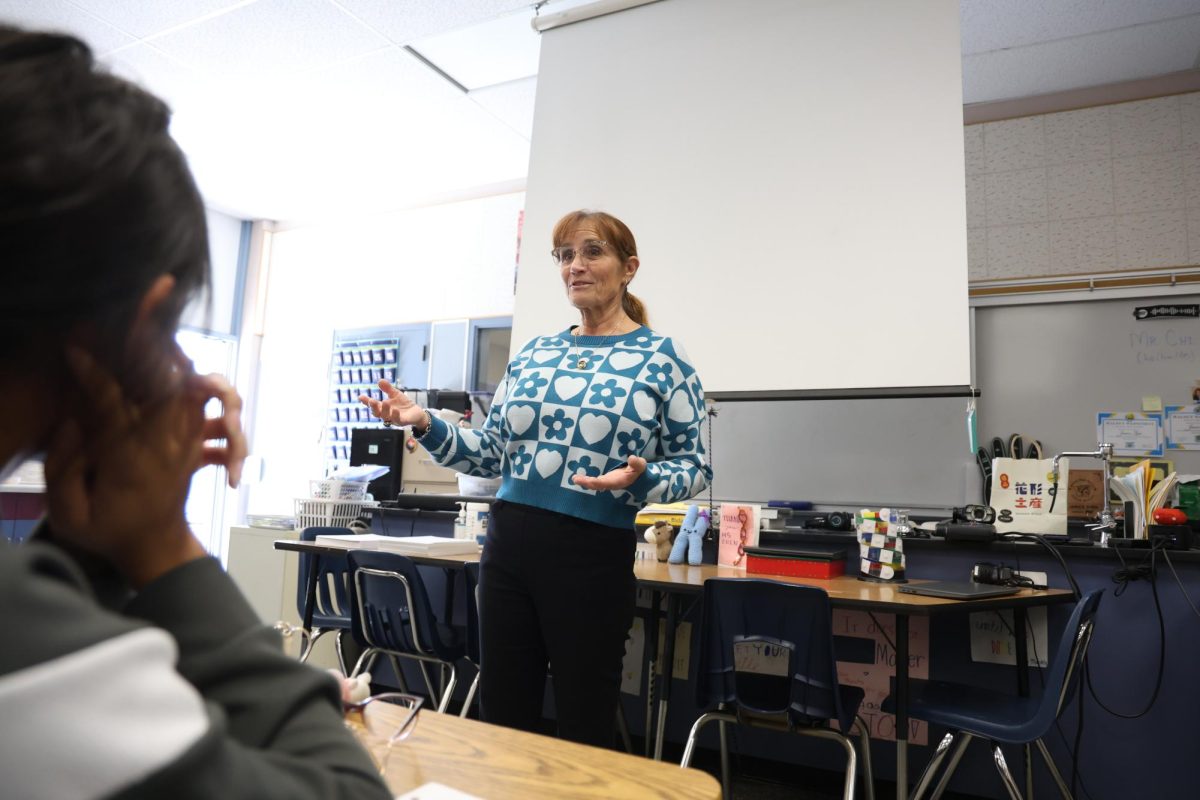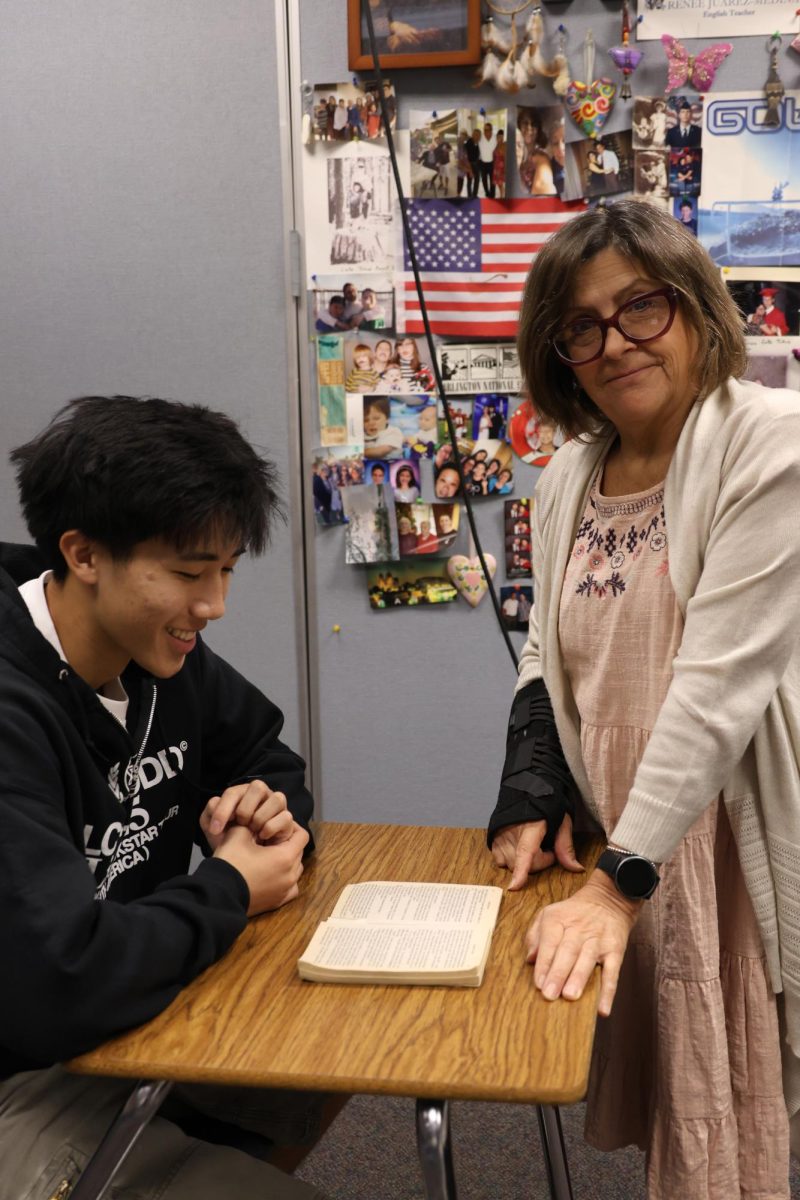

During a lesson about kidneys, Career Technical Education (CTE) nursing pathway teacher Jennifer Carreno connects the lesson to her hospital experience in assisting with kidney stone procedures to help her Emergency Nursing students better grasp concepts.
On top of recently giving birth to her son, Grayson, and earning her master’s degree in nursing education from Western Governors University in August, Carreno has been juggling her two lives working both as a nurse at St. Jude Hospital in Fullerton and as a medical educator for 14 years. With teaching, she feels rewarded getting to see her students’ successes.
“In patient care, I can help five or six patients a day, depending on if patients leave or I get new patients back. [However], if I’m helping 120 students, once they go out in the world and they’re helping five patients a day, I’m making such a bigger impact in the world,” Carreno said.
At the hospital, Carreno works in the medical-surgical neurology unit, taking care of patients before and after surgeries. At school, she exposes students to the medical field, teaching the nursing pathway, which includes Emergency Nursing and Clinical Medical Assisting. In these courses she teaches students using interactive activities, one of which is the virtual simulation Body Interact where students treat patients linked to the topics they are currently learning. The hands-on activities in her classes include various medical procedures such as giving injections, drawing blood, checking blood sugar, testing urine and doing vital signs, along with how to assist in minor surgeries. Aside from her classes, she also advises the Walnut chapter of Future Health Professionals (HOSA), an organization that hosts state and national competitive healthcare related events.
“My favorite part of being in the nursing pathway is learning about the many different pathways in college that I can take and how many different nursing programs there are,” nursing pathway student and HOSA member senior Elizabeth Vazquez said. “[Carreno is] fun, super outgoing, really upbeat and makes everything interesting, so we never feel bored in her class. She makes me feel like I can do anything.”
Carreno’s passion for health care stemmed from her family’s background in emergency medicine, which involved constant 911 calls and night shifts. Looking for less intensive work hours, she began her medical journey by becoming a medical assistant in 2007 and then eventually a registered nurse in 2022. Her teaching career began at Everest College and an adult Regional Occupation Program (ROP) campus in West Covina, both of which she taught medical assisting. After COVID-19, where Carreno was unable to teach her class, she chose to come to Walnut in 2020 after gaining a good impression of its reputation. She sees a stark contrast between the hospital and school environment, but she places an emphasis on maintaining a positive mindset through balancing her two roles.
“Nursing is way more mentally taxing because I have to think critically and fast and sometimes I have to make a decision on if I can save that patient’s life in the moment. I never have to do that [at school] because I’ve [taught] for so long and there’s just always something fun going on,” Carreno said. “[Teaching] doesn’t feel like work, [to me], it’s just coming to hang out with some teenagers, and for the hospital, I get to go hang out with my friends and take care of some patients while I’m there. It’s all about outlook and then having that positive perception of what you’re going to do.”
CTE Medical Pathologies and Sports Medicine teacher and HOSA adviser Sheila Sebastian currently holds a bachelor’s degree and is inspired by Carreno to one day earn her master’s as well. She also has been able to learn many medical skills and insights from Carreno to incorporate into the Medical Pathologies pathway she teaches.
“She manages everything very well. You wouldn’t even know she’s wearing all of these hats,” Sebastian said. “I didn’t know how to suture, but she helped teach me with that because in the Medical Pathologies pathway, we are trying to incorporate suturing, [which is something] I didn’t need to learn in athletic training. She has also taught me more about life skills that happen in the hospital setting than in the classroom setting as well.”
Carreno ultimately does not want to only provide medical knowledge, but also teach what she feels defines an exemplary healthcare worker: care and dedication to patients. She hopes to continue instilling these values in her students and finds joy every day in being a part of their journeys in the medical field. Considering nursing school one of the hardest obstacles she has gone through, her goal is to create a pre-nursing pathway that makes students’ future medical education easier and more meaningful.
“The most important thing is for workers to have compassion for the people they’re caring for, so I try really hard to care for my students the same way I would like them to give care for their patients. I want to inspire people to want to go into healthcare to help people, not just for the paycheck,” Carreno said. “We’ve got such great students here on this campus that it’s fun to be able to guide them in the right path that will make their heart happy.”