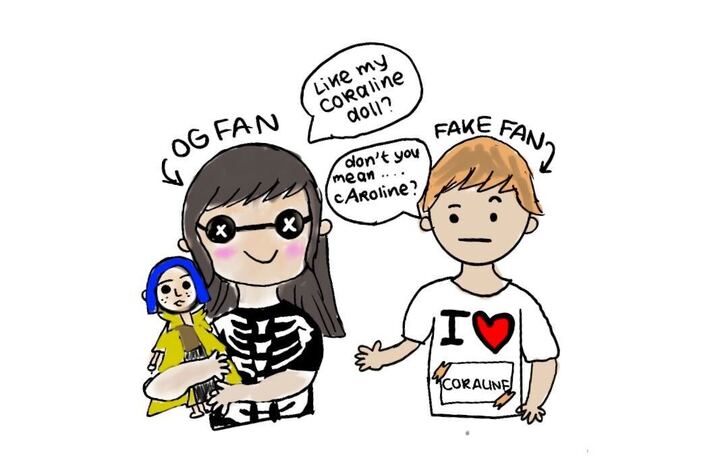
Once, avid fans of niche movies were seen as obsessive nerds in tight-knit communities. Now, these people find themselves in fandoms with new fans from social media platforms, eager to pursue the idea of authenticity without considering their personal passions.
Nerd culture becoming mainstream contains many underlying issues. With the rise of social media and performative personas, individuals strive to appear unique to their peers. They carefully curate their hobbies and interests, drawing inspiration from fandoms that positively contribute to their public image. In the process, these individuals fail to appreciate their own unique identity, neglecting the passions that truly align with their characters.
Select niche entertainment, such as the “Coraline” movie and “The Maze Runner” movie trilogy, has especially attracted viewers online. The themes and aesthetics of these productions appeal to those who peruse online platforms, resulting in a widespread movement where everyone claims they are true fans in the fandoms.
For instance, “Coraline” includes intricate visuals and a thrilling plot that contribute to the wonder of the film. I have been a fan of Coraline ever since elementary school, appreciating the movie’s originality and comforting atmosphere. Yet in recent years, “Coraline” has gained immense popularity on TikTok. Content creators produce theories about the Other Mother, while users make movie edits. People claim that they love “Coraline,” which, in previous years, was a niche film that many deemed too dark for children.
The movie is now one of the most popular and successful stop-motion movies. Yet, I wonder if these fans truly appreciate the wonder of the film, or if they’re going along with the online community in the pursuit of surface-level originality. The complicated layers of the plot can be used to fuel the idea of an intellectual identity without actual commitment to the meaning of the film, which ultimately undermines the credibility of new fans.
On the other hand, “The Maze Runner” movie trilogy has also gained immense popularity. Dystopian movies have long since become subjects of adoration, particularly evident in the rise of teen dystopian entertainment in recent years. However, I have noticed that so-called supporters of the trilogy are more fixated on the physical appearances of cast members such as Dylan O’Brien, who played Thomas, than the actual plot. Additionally, claiming to be a follower of the fandom can be viewed by others as an interesting quality that stands out in the backdrop of other heavily saturated dystopian movies, such as “The Hunger Games” trilogy.
Despite these factors, the accessibility of niche entertainment can combat the traditional nerd stereotype and help indie filmmakers reach a bigger audience. Furthermore, this shift can encourage people to pursue their interests without the fear of peer judgment in an inclusive environment.
While nerd culture being mainstream can give recognition to underappreciated entertainment and provide exposure to new interests, it is more often the outcome of performing for the public. As a result, old fans are left in a community of followers who lack actual appreciation for the fandoms that they have genuinely supported for years, where personal passions are abandoned for the pursuit of superficial authenticity.