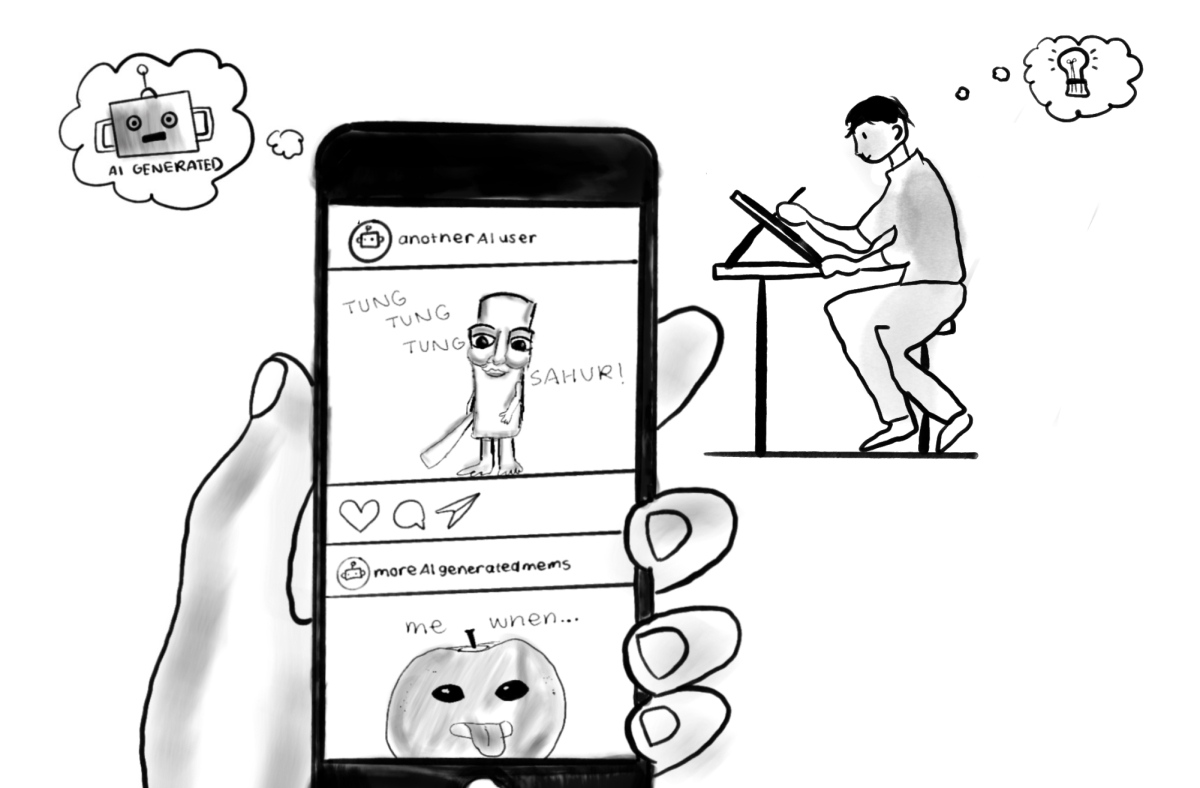
Ever since the appearance of the internet, social media has always been a place that thrived on creative memes, originality and humorous inside jokes. Memes used to evolve all the time as people remixed ideas in clever and unexpected ways. However, today, AI-generated memes and art dominate social media feeds and corrupt true creativity that once defined the internet.
One of my biggest issues with AI-created memes is that it isn’t relatable at all compared to traditional memes, which often come from shared experiences and specific moments that almost everyone understands or is familiar with. For example, all original memes that came from before 2022 were actual people pointing out something universal, such as procrastination or reactions when eating good food.
Nowadays, creators are rapidly pumping out videos of AI-generated animals dancing, celebrities fighting against one another, jelly-like keyboards and even houses. Specifically, one meme that blew up recently is “Tung Tung Tung Sahur,” which often includes a character dancing, enjoying life or hanging out in an imaginary world. In my opinion, these AI-created memes are unbearable and so corny that it makes me want to just not consume media anymore. They feel repetitive, hollow and detached from society and the communities that once shaped meme culture.
In addition, it becomes hard to distinguish between what is AI and what is not. Many times when scrolling through TikTok, I see a funny video that I thought really happened. But it turns out the video was actually not real, which creates doubt when I see videos or memes in the future. This confusion undermines authentic work from small creators, encouraging a culture of trying to create work that is most “realistic” rather than original and creative.
I also really appreciate art, but creators who once put a lot of effort into putting their art out onto the internet are often outcompeted by artificial intelligence that can make art more precisely and at a much faster pace. A single account can flood platforms with hundreds of AI-generated images or memes in minutes, pushing smaller creators out of visibility. If meme culture and the internet continue to be dominated by this new media, originality and creative struggle will soon replace artistic expression for good.
While the usage of AI in memes can sometimes be convenient and easy, allowing it to replace human creativity on the internet puts it at risk of losing its communal aspect. Social media apps must take action to limit AI-produced works to protect memes and reward genuine work. To preserve the originality and cultural meaning that once defined meme culture, creativity must stem from actual human experience, not automated generation. Ω