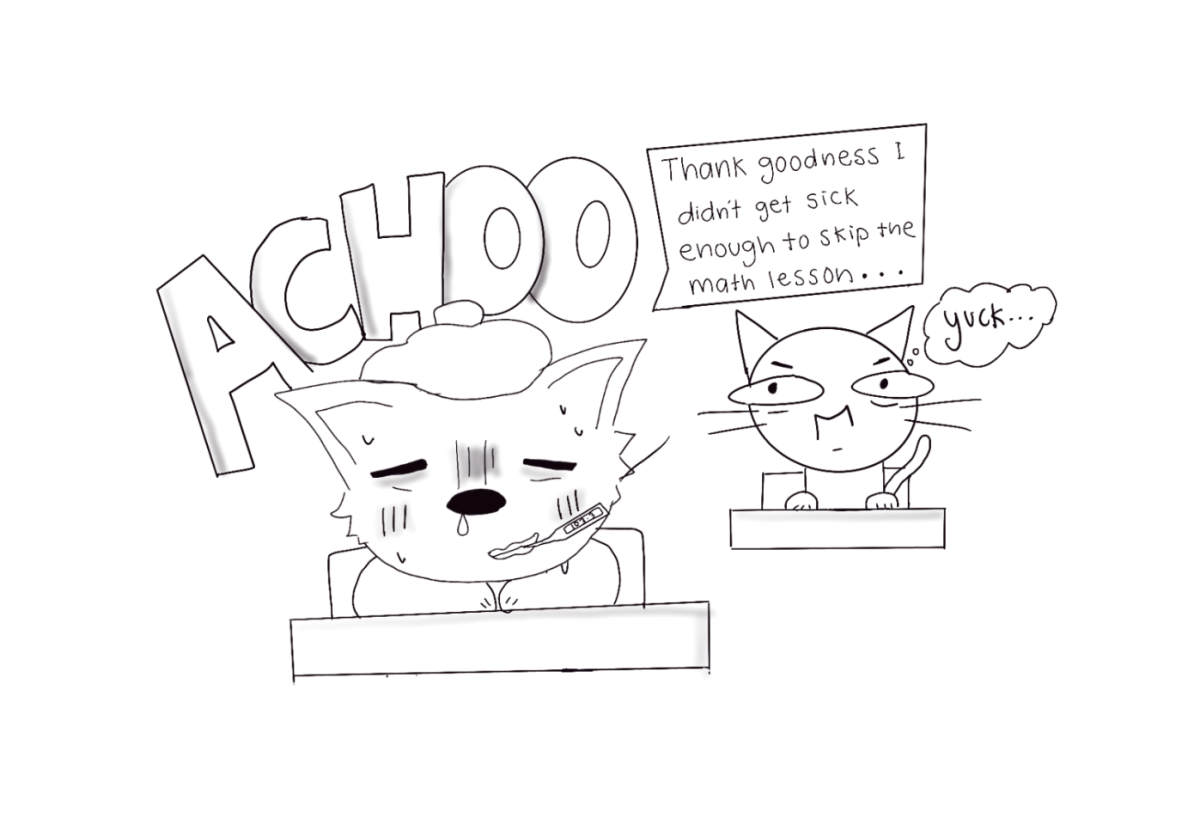
It’s 6:00 a.m. on a Monday and you’ve barely gotten a wink of sleep; the cause? You’re trying to breathe through your clogged nose, where one of your nostrils just won’t cooperate and is driving you crazy. Your forehead is burning, and it hurts to swallow; it definitely seems like you have a fever. You could just pull the covers up, try blowing your nose or drinking water to soothe that sore throat, but instead, all you can think about is that math test during first period, it’s so important that it couldn’t be missed for the world, right?
In almost every class I have, I simply turn left or right and see students under the weather with various symptoms of the flu. Coming into school with a minor cough or a runny nose is considered to be a minor worry, as it causes no major threat to students’ well-being. However, the normality for students who have fevers or serious stomach pain to tough it out for the rest of the school day is unhealthy and destructive to their bodies. (Not to mention risking spreading their illness to others).
The toxic mentality that students cannot miss a day of school stems from immense pressure and competition that leaves them pouring all their attention into their studies and schoolwork. At first, this can be seen as a dedicated approach to learning, but it can quickly spiral out of control when a student’s physical health is compromised. I often see my friends ignoring major symptoms of fever or stomach flu, which, according to Walnut High School’s health department, can send a student home if they have a temperature of 100.4 Fahrenheit or if they vomit. When I tell them to simply call in sick and get some rest at home, they all reply with the same concerns: “I don’t want o miss my class, I have a quiz coming up,” or “I don’t want to fall behind on my assignments if I go home”.
I admit, I too had the same mindset of pushing myself to make it to the end of the day, but seeing my friends going through the same harmful viewpoint allowed me to realize that missing a couple of periods of class and taking the day off is better than facing the consequences of staying at home for a week because my illness worsened.
In most teachers’ syllabi, it outlines policies for make-up work when absent, which can vary from giving students the same number of days to make up assignments based on the number of days they were absent to getting a whole week to do so. This gives students the chance to focus on getting better instead of working while sick, posing no problem for students who must catch up on their studies.
But in some situations, students who do want to stay at home and rest are forced by their parents to go to school. Oftentimes, parents are not comfortable leaving their child at home and cannot stay with them due to conflicting schedules, or worry about a poorer academic performance if they do miss school. They forget that missing an entire week or just a day of school causes no harml if the student is responsible for managing their workload, as they will still be given an appropriate amount of time to catch up and complete assignments without penalty.
When their health is taken out of consideration, students force themselves to believe their parents’ unrealistic expectations and disregard their well-being. It risks worsening their sick condition and creating consequences that could have been avoided from the start.
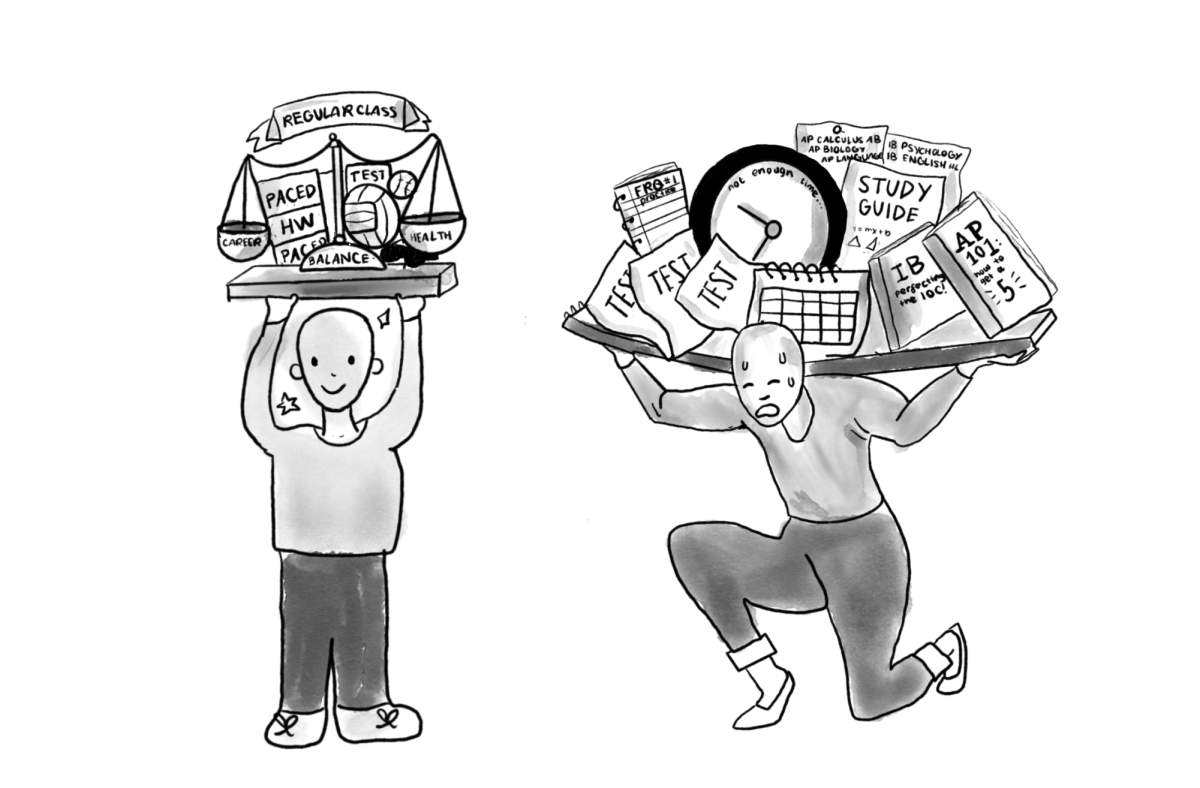
But even with fair make-up policies and parent approval, for students, especially ones who take Advanced Placement (AP) classes or are in the International Baccalaureate (IB) program, missing a day’s lecture or test adds to their already long list of make-up work for all of their other classes. The overwhelming presence of work resulting in a day’s absence creates an almost impossible dilemma for students who value efficiency and staying ahead. Catching a fever or a stomach bug is a normal occurrence, but the main problem lies in students ignoring their own limits to discomfort and state of health. The expectations for students to value school more than their own safety is a huge problem and needs to be taken more seriously by parents and teachers. Safety should always come first, no matter the situation.
The best way to allow yourself to heal is through sleep, as it is one of the biggest factors in being able to give the body time to properly fight off viruses without being strained by physical movement. While our body is resting, sleep helps the immune system function and fights infection, according to The National Library of Medicine (NIH). It can be frustrating when the healing process takes longer than expected, but having patience and treating your body with kindness is the most important thing to do. Sick students who come into school not only worsen their own health, but also the health of the students around them, with close classroom seating and space being an easy way for bacteria and germs to spread.
So the next time you run a high temperature or have a hacking cough that just won’t go away, make sure the first thing on your mind is your own health and safety, rather than the worry of falling behind. There is a time for everything, and that math test will still be there waiting for you on the teacher’s desk.