When you picture school supplies, your mind races to the idea of college ruled notebooks or an abundance of different colored pens and pencils — but the reality of what has become an essential staple and has virtually taken over the desks of students is not stationary, but fidget toys.
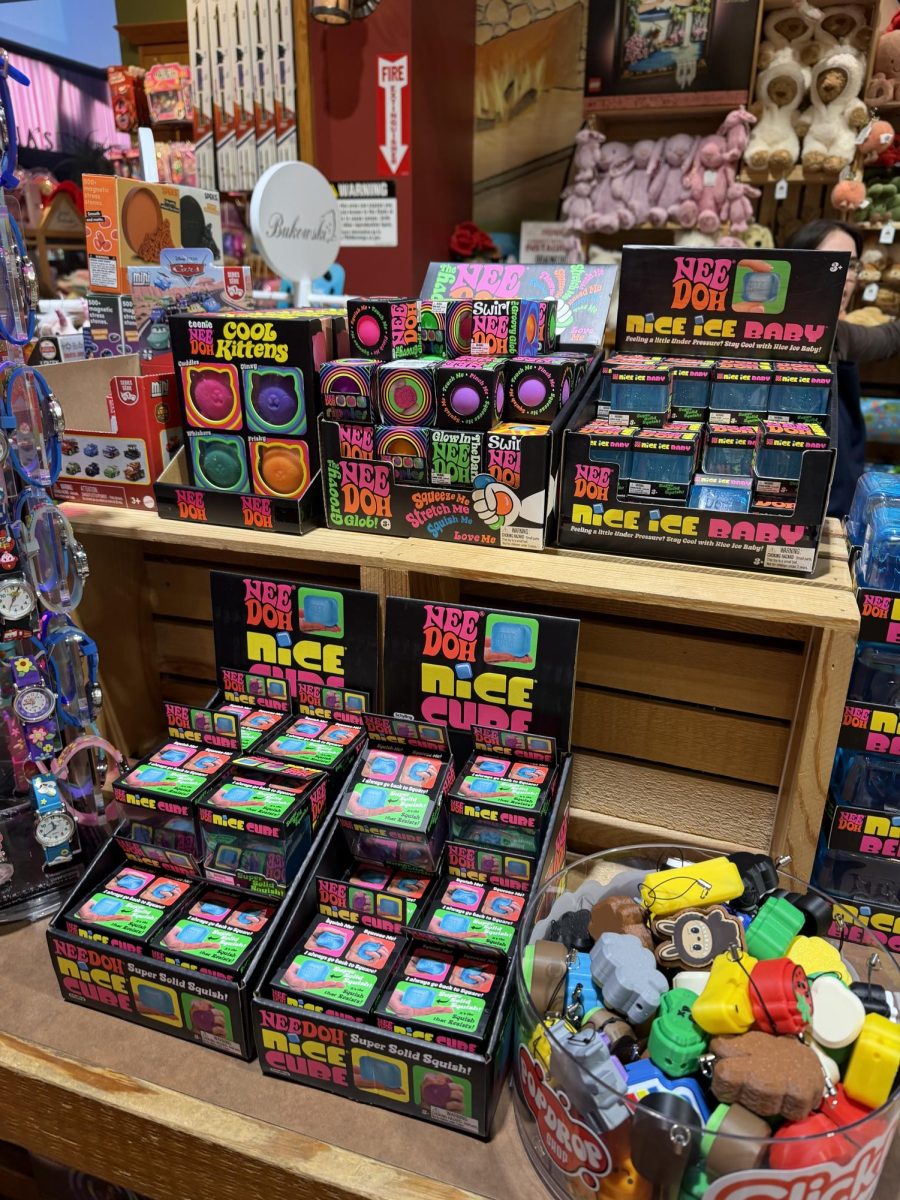
Fidget toys are defined as stress relieving items that can reduce anxiety, increase focus and redirect stress by reducing nervous energy through a separate task, typically one that is sensory such as squishing a stress ball. According to an experiment conducted by the National Institute of Health, fidget toys were shown to increase student’s attention spans and also encourage on-task behaviors. These toys have seen consistent popularity for all ages such as 2016’s fidget spinner era, 2020’s pop-its and as of this year, NeeDoh gel-filled stress balls and mystery dumpling clay-filled squishies have completely taken social media by storm, receiving traction from students. The issue at hand is not the toys themselves, but the effects of consumerism which has not only significantly hindered the accessibility of these toys to those who need them, but also has produced excessive amounts of plastic.
These stress-relieving toys have become a quick fix solution to stop restless legs, twiddling thumbs and to distract from anxiousness in classrooms, making fidgets tangible tools to increase productivity. As a person who owns a NeeDoh squishy, utilizing them in class has helped me better manage test anxiety and also really hone in on the material we are working on in class. I’ve also seen how these squishies have fostered connections across different groups, as the squishies have brought different people together through a shared enjoyment and satisfaction for the toys. In a way, it’s nice to know that we are not alone in dealing with stress, but managing it together. In spite of the benefits we reap in having fidget toys, I have also seen how collections have grown into examples of overconsumption and it has honestly gotten way out of hand.
Due to its increased social media prevalence, many people who were influenced by the “trendiness” of fidget toys have practically cleared out shelves which has removed accessibility from people who use them to destress, because they are so hard to find. Instead of buying just one and saving the rest for other people to enjoy, a lot of people are indulging in a sense of popularity gluttony and wiping stores clean of the fidgets from those who may actually need them to focus.
For example, many TikToker’s are attempting to get their hands on the mystery glitter dumpling squishy, which is a limited edition. Because each squishy is in a blind box, instead of luckily opening a mystery one, I’ve seen multiple users buying well over a hundred squishies and entire cases in hopes of finding one. Each squishy dumpling is individually packaged and is practically heaps of plastic, creating lots of waste. Although the normal squishies serve the same function, people are carelessly tossing them to the side and just allowing them to pile up — carried away in the thrill. In another trend, individuals are encouraged to act as surgeons and use a needle to pop or cut open their squishies to see what is inside and remove some of the air. The majority of the results I’ve seen have gone wrong, as the squishies become unusable or it creates a huge mess. It just seems excessively wasteful to destroy it purposefully and just throw it away.
In my classes, I’ve seen people with stacks of different types of NeeDoh stress balls. While I think people should be able to collect what they want, I believe that they should be used in moderation instead of having an overly excessive amount. If they all are practically the same, why do you need 10 of one type of squishy? Maybe one or two is understandable, but at the end of the day, the toys are plastic and having so many defeats the value in its intended use. Before we know it, these microtrends may be the next thing to end up in the landfill. So before impulsively buying a fidget toy to fit in with the trends, ask yourself if you’re getting it for the right reasons or whether you are contributing to the massive overconsumption issue at hand.